Rates vary and depend upon what procedures are performed. It is best to consult with your acupuncturist about costs.

Rates vary and depend upon what procedures are performed. It is best to consult with your acupuncturist about costs.
The number of treatments will vary from person to person. Some people experience immediate relief; others may take months or even years to achieve results. Chronic conditions usually take longer to resolve than acute ones. Plan on a minimum of a month to see significant changes.
Treatment frequency depends on a variety of factors: your constitution, the severity and duration of the problem and the quality and quantity of your Qi. An acupuncturist may suggest one or two treatments per week, or monthly visits for health maintenance and seasonal “tune ups”.
Yes. In some instances children actually respond more quickly than adults. If your child has an aversion to needles, your acupuncturist may massage the acupuncture points. This is called acupressure or tuina.
Herbs can be a powerful adjunct to acupuncture care. They are used to strengthen, build and support the body or to clear it of excess problems like a cold, fever or acute pain. Your practitioner may suggest starting with herbs and then adding acupuncture to your treatment in the future. This is suggested to build up your internal strength so you can receive the full benefits acupuncture has to offer.
The tongue is a map of the body. It reflects the general health of the organs and meridians. Your acupuncturist will look at the color, shape, cracks and coating on your tongue.
There are twelve pulse positions on each wrist that your acupuncturist will palpate. Each position corresponds to a specific meridian and organ. Your acupuncturist will be looking for twenty-seven individual qualities that reflect overall health. If there are any problems, they may appear in the pulse.
During the initial exam a full health history will be taken. Questions will be asked regarding symptoms, health and lifestyle. Your acupuncturist also may check pulses and your tongue and may conduct a physical exam. This information is then organized to create a complete, accurate and comprehensive diagnosis of where Qi has become blocked or imbalanced. After the interview process, you receive an acupuncture treatment.
Acupuncture is an effective form of health care that has evolved into a complete and holistic medical system. Practitioners of acupuncture and Chinese medicine have used this noninvasive medical system to diagnose and help millions of people get well and stay healthy.
An acupuncturist will place fine, sterile needles at specific acupoints on the body. This activates the body’s Qi and promotes natural healing by enhancing recuperative power, immunity and physical and emotional health. It also can improve overall function and well-being. It is a safe, painless and effective way to treat a wide variety of medical problems.
Video: Boyd’s Return to the Bandstand After Stroke
Linda’s husband, Dr. Boyd Phelps, DMA, is a professional saxophonist and music educator who lost nearly all knowledge of music — notation, theory, familiar melodies, etc — when he suffered several strokes in the left hemisphere of his brain during the last year (2010-2011) . As a result of the strokes, Boyd has expressive and receptive aphasia (impaired ability to speak, read, write, or comprehend words) and acquired amusia (impaired ability to play or understand music). Until the strokes, Boyd was a very fine musician, music educator, bandleader, author, and an authority on the saxophone. Now he has difficulty in all these areas due to his aphasia and acquired amusia. Through his determination and strong work ethic, and with the help of acupuncture and speech therapy, Boyd is regaining his music and language skills. On July 26, 2011, Boyd was finally able to play his saxophone with his band for the first time in a year, and we captured the milestone event in this video!
Acupuncture is very effective in reducing and resolving the effects of stroke, including not only language and music skills but also resolving paralysis, pain, sensory perception, and other neurological impairments. For optimum results, acupuncture treatments should begin as soon as possible once a stroke has begun. This is well known in China, where acupuncture has been a common medicine for thousands of years. Boyd’s treatments began 4 days after the stroke, while he was still in the hospital, and there was marked improvement in his language skills immediately after treatment. His music impairments were not known about until Boyd tried to play his saxophone after he was discharged from the hospital.
Acupuncture treatment for stroke addresses specific areas of the brain affected by the stroke, and also energetic pathways in the body. In the community acupuncture setting, treatment for stroke involves the stimulation of acupuncture points on the arms, legs, and head. Electroacupuncture – a subtle electrical pulse applied to the needles on the head – is used to stimulate neurological function of the affected brain regions.
Do you notice problems with your short-term or long-term memory? Do you want to prevent memory problems? Acupuncture can enhance your memory and prevent memory loss or poor memory. In Traditional Chinese Medicine, or TCM, there are 3 different aspects of our memory and these are controlled by the Spleen, Heart, and Liver in TCM physiology. Acupuncture boosts memory by nourishing the Blood of the Spleen, Heart, and Liver. The following article, which appeared in Acutakehealth.com today, explains in more detail:
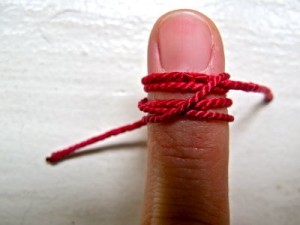
Memory Is In The Blood
from AcuTake on July, 19, 2011 (acutakehealth.com)
Two separate studies released last week looked at why we sometimes have a hard time remembering things. One said internet use plays a role, as we make less effort to retain information we know can be retrieved later; the other exposed the damaging effects of binge drinking, for its ability to trigger a steroid that interferes with memory.
As anyone who has attempted to recite a phone number in the past 10 years can confirm, technology certainly has dwindled our recall abilities. And drinking need not be of the binge variety to remind us that alcohol clouds the memory.
But what about memory lapses that are unrelated (or in addition) to the deficiencies created by computers and alcohol? What underlying issues make us susceptible to these kinds of external factors that contribute to poor memory? This is where acupuncturists focus their attention.
Poor memory usually is a sign of Blood Deficiency stemming from an imbalance in the Spleen, Heart or Liver system.
Blood in acupuncture is not the same as the blood we think about in biomedicine. Functionally and energetically, Blood is the counterpart to Qi, the vibrant, dynamic element that allows the physical, emotional and spiritual parts of a person to thrive. If Qi is active, Blood is still. Blood is what allows us to relax into ourselves, to soften so that we’re able to receive the things that Qi brings about.
In order to retain memories, we have to receive them in the first place. We need Blood in order to embrace and actualize that which is happening around us. When Blood is deficient, the memory—the ability to capture experiences and allow them to nourish us—can be poor. Other common signs of Blood Deficiency include paleness, dry skin or hair, dizziness, blurred vision, fatigue, numbness in the limbs, light or absent menstrual periods, restlessness, and lack of self-esteem.
To rectify a Blood Deficiency pattern, acupuncturists ask where it’s coming from.
A clue in this regard can come from any symptoms that accompany the classic Blood Deficiency signs mentioned above. Sometimes Blood Deficiency can affect a particular organ system, thereby causing symptoms that are specific to that organ. For example, a person with Heart Blood Deficiency may experience heart palpitations and insomnia in addition to poor memory; someone with Spleen Blood Deficiency may have digestive problems.
Another indicator of the underlying imbalance is the type of memory that’s compromised.
Problems with short-term memory generally are associated with the Spleen. The Spleen plays a critical role in producing and then holding onto the Blood, so when the Spleen is weak, there is not enough Blood to support short-term memory. One extremely common pattern in Western societies, Spleen Qi Deficiency, is caused by overwork or excessive mental concentration, which is why many people notice a decline in memory during high-stress times at work or school.
The Heart is said to house the Mind and rule the Blood, making it vital to both short-term and long-term memory. Typically, however, Heart imbalances are linked to long-term memory problems. The Heart system is responsible for the continuous circulation of blood, through the vessels but also continuously over time, allowing for uninterrupted recall of past events.
The Liver also may play a role in memory loss. The Liver stores the Blood so that body tissues stay appropriately moist and nourished. The mental and emotional aspects of a person, including memory, require this nourishing as well. Good memory also is dependent on smooth flow throughout the body so that all structures and functions can effectively support the formation and retention of Blood. This also is the domain of Liver.
Like memories, the reasons for losing them are unique to each person. Acupuncture creates a customized picture to help prevent memory lapses and regain lost moments—often they’re found in the Blood.
But what about memory lapses that are unrelated (or in addition) to the deficiencies created by computers and alcohol? What underlying issues make us susceptible to these kinds of external factors that contribute to poor memory? This is where acupuncturists focus their attention.
Poor memory usually is a sign of Blood Deficiency stemming from an imbalance in the Spleen, Heart or Liver system.
Blood in acupuncture is not the same as the blood we think about in biomedicine. Functionally and energetically, Blood is the counterpart to Qi, the vibrant, dynamic element that allows the physical, emotional and spiritual parts of a person to thrive. If Qi is active, Blood is still. Blood is what allows us to relax into ourselves, to soften so that we’re able to receive the things that Qi brings about.
In order to retain memories, we have to receive them in the first place. We need Blood in order to embrace and actualize that which is happening around us. When Blood is deficient, the memory—the ability to capture experiences and allow them to nourish us—can be poor. Other common signs of Blood Deficiency include paleness, dry skin or hair, dizziness, blurred vision, fatigue, numbness in the limbs, light or absent menstrual periods, restlessness, and lack of self-esteem.
To rectify a Blood Deficiency pattern, acupuncturists ask where it’s coming from.
A clue in this regard can come from any symptoms that accompany the classic Blood Deficiency signs mentioned above. Sometimes Blood Deficiency can affect a particular organ system, thereby causing symptoms that are specific to that organ. For example, a person with Heart Blood Deficiency may experience heart palpitations and insomnia in addition to poor memory; someone with Spleen Blood Deficiency may have digestive problems.
Another indicator of the underlying imbalance is the type of memory that’s compromised.
Problems with short-term memory generally are associated with the Spleen. The Spleen plays a critical role in producing and then holding onto the Blood, so when the Spleen is weak, there is not enough Blood to support short-term memory. One extremely common pattern in Western societies, Spleen Qi Deficiency, is caused by overwork or excessive mental concentration, which is why many people notice a decline in memory during high-stress times at work or school.
The Heart is said to house the Mind and rule the Blood, making it vital to both short-term and long-term memory. Typically, however, Heart imbalances are linked to long-term memory problems. The Heart system is responsible for the continuous circulation of blood, through the vessels but also continuously over time, allowing for uninterrupted recall of past events.
The Liver also may play a role in memory loss. The Liver stores the Blood so that body tissues stay appropriately moist and nourished. The mental and emotional aspects of a person, including memory, require this nourishing as well. Good memory also is dependent on smooth flow throughout the body so that all structures and functions can effectively support the formation and retention of Blood. This also is the domain of Liver.
Like memories, the reasons for losing them are unique to each person. Acupuncture creates a customized picture to help prevent memory lapses and regain lost moments—often they’re found in the Blood.

